For travellers
Vacation Watering: Terracotta Spikes vs Watering Globes vs Timers (Tested)
8 min readPublished 2026-10-25Updated 2026-10-25
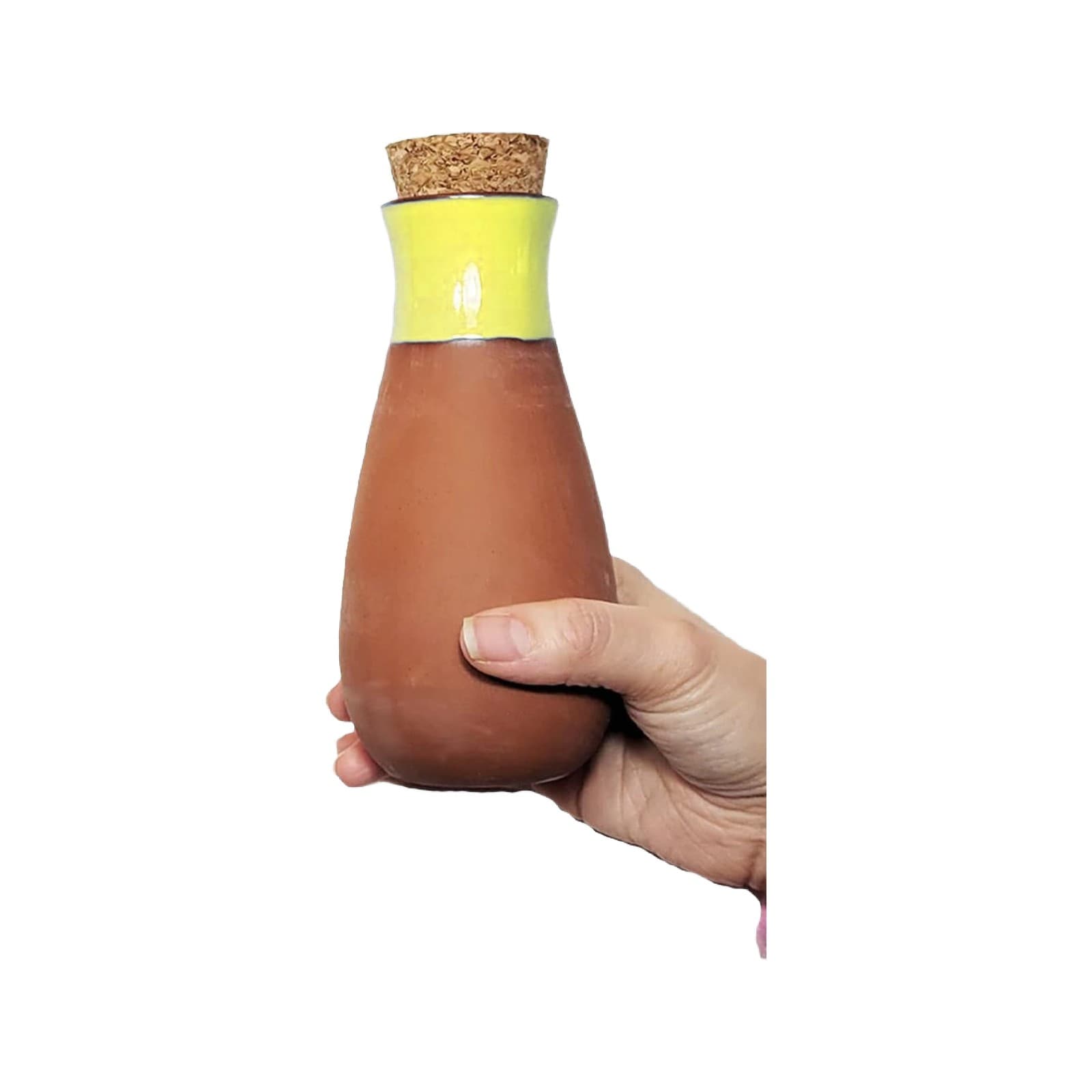
For trips up to about two weeks, terracotta watering spikes screwed onto bottles are the most reliable passive system: porous ceramic releases water only as the soil dries, so a thirsty pot drinks faster and a moist pot drinks slowly, and no failure mode dumps a litre into your monstera. Watering globes — the glass bulbs — look elegant and fail predictably: the neck clogs with soil, the initial pour floods the pot, and the vacuum seal releases in gulps. For two weeks or longer, or for a whole balcony, the gold standard the community keeps arriving at is a drip line on a timer.
The anxiety behind the "am I screwed?" threads is real: a 25-gallon grow bag on a balcony with no one trusted to water it is a genuine emergency. But almost every vacation death follows one of three failures — the device was a globe, the system was tested for one day instead of one week, or the plant was watered into standing water the morning of departure. All three are preventable.
How terracotta spikes actually work
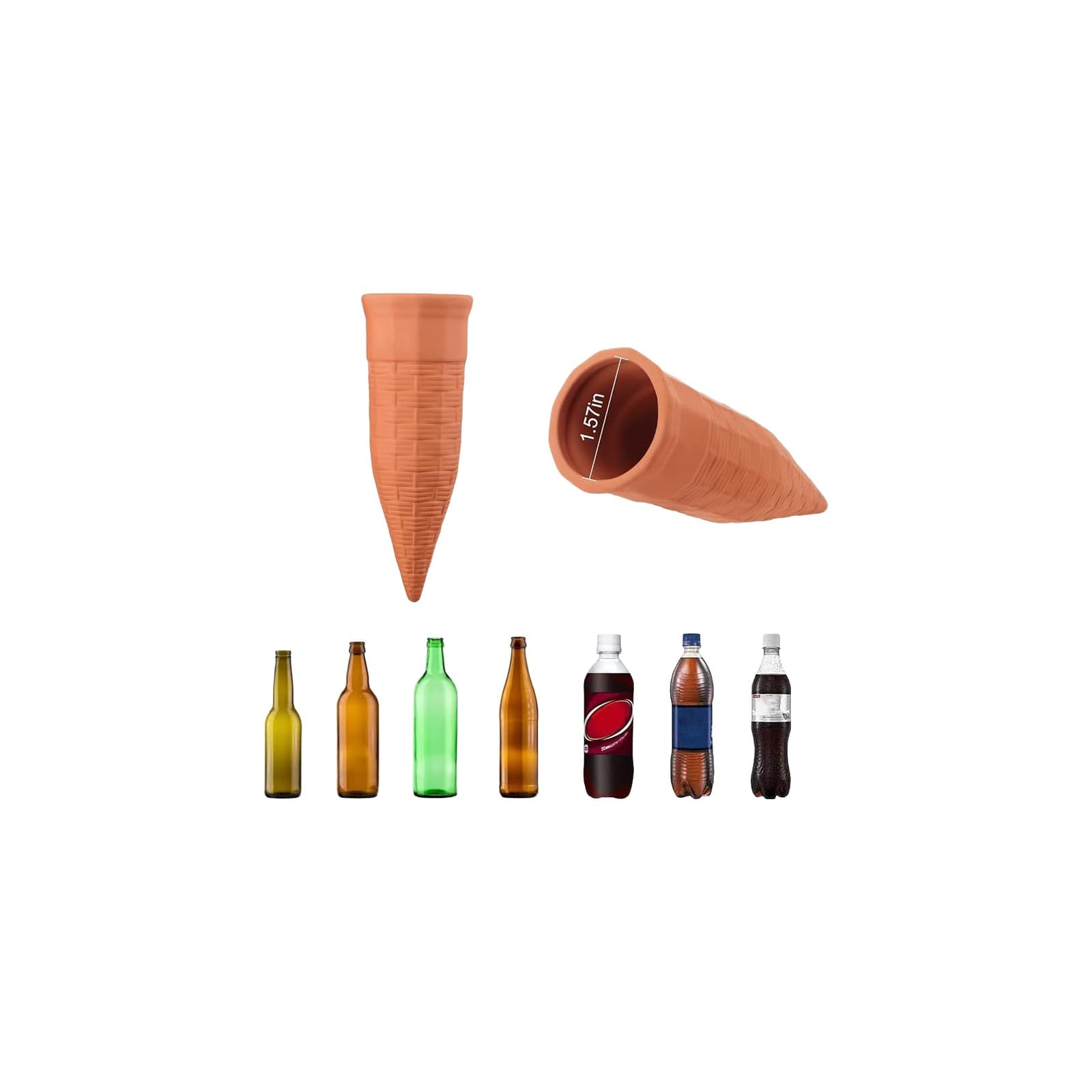
An unglazed ceramic cone is a semi-permeable membrane. Fill it (or screw a filled bottle onto it), push it into the soil, and water moves through the ceramic only when the surrounding soil is drier than the water inside — capillary and osmotic pressure do the metering, with no electronics and no valve to fail. The practical consequences: a 0.5 L bottle on a spike keeps a medium pot comfortable for 5–10 days depending on heat, light and plant size; a 1.5 L bottle goes further; and because delivery slows as the soil moistens, the system self-regulates. The community verdict on spikes — "top of soil always dry, plants exploded" — is the capillary effect doing exactly what it should: water arrives at the root zone, not the surface.
Why globes disappoint
A watering globe is a sealed reservoir with a narrow neck. Three failure modes repeat across the threads. First, the neck clogs: fine roots and soil particles block the single opening, so the globe stays full while the plant wilts. Second, the initial insertion releases a slug of water as the seal breaks — enough to waterlog a small pot once, which is the opposite of what a vacation setup needs. Third, the reservoir is small and visible, so it runs dry mid-trip with no indication, while a spike on a 1.5 L bottle is quietly still working. Globes are honest glass decoration; for actual water delivery they lose to a €3 ceramic cone.
| System | Reliable window | Failure mode | Verdict |
|---|---|---|---|
| Terracotta spikes + bottles | 5–14 days per pot | Bottle runs dry on a very thirsty pot | Best passive option — self-metering, cheap, no parts |
| Watering globes | 3–7 days | Neck clogs; flood on insertion; small reserve | Skip — the aesthetics are better than the engineering |
| Wicking (cotton rope to a reservoir) | 7–14 days | Wick too thin, or pot dries out fully and the wick loses contact | Good for tropicals that like even moisture |
| Drip kit + timer | Unlimited (refill reservoir) | Battery dies, or a line pops off a fitting | The gold standard for 2+ weeks and whole balconies |
| Bathtub soak (indoor pots) | 10–14 days | Root rot for plants that hate wet feet | Works for ferns and calathea, death for succulents |
The vacation-proof shelf
The 14-day departure plan
- 01Seven days out: test everything. Spikes in, bottles filled, and — this is the step people skip — watch one full day of actual water drop. A system installed the night before a flight has never been tested.
- 02Five days out: deep-water everything normally, then mulch the top of each pot with gravel or bark to slow evaporation. Move succulents and cacti away from the sunniest ledge; they are the ones most likely to need nothing at all.
- 03Three days out: group pots by thirst and cluster them — a grouped pot cluster keeps its own micro-humidity. Top up every spike bottle. For indoor tropicals, a bright bathroom with the door closed is a legitimate two-week microclimate.
- 04One day out: final fill on all bottles, and one measured drink for the thirstiest pots. Do not flood everything "just in case" — waterlogged roots die faster than dry roots at every timescale under a month.
- 05Departure day: photograph the setup, close curtains to half (light yes, full sun no), and leave. Check nothing. The system was tested on day minus seven.
Match the bottle to the plant
Spike delivery rates hover around 30–80 ml per day for a standard 10–15 cm pot, varying with heat, pot size and how root-bound the plant is. That means one spike on a 0.5 L bottle is roughly a week for a medium foliage plant in spring, and three days for a thirsty tomato in August. The working rule: small foliage plants and herbs take one spike and a 0.5–1 L bottle; medium houseplants take one 1.5 L bottle; anything edible and summer-sized takes two spikes and the largest bottle you own, plus a catch-tray reserve underneath. Succulents and cacti need no spike at all in any season — an unwatered cactus outlives a monitored one on a two-week trip. When in doubt, weigh the pot the day you set the spike and again on test-day three: if the weight has barely moved and the soil surface is damp, the spike is delivering faster than the plant drinks; downsize the bottle.
The neighbour backup (and why it fails silently)
Handing keys to a neighbour feels like the human solution, and it fails in a specific, repeatable way: the neighbour waters on their own schedule, by feel, with no baseline. Pots that needed 300 ml get a splash; pots that needed nothing get drowned; and the one plant on the windowsill gets missed entirely. If you do use a human backup, engineer around the failure: group every pot that needs water into one bright spot, move everything that does not out of the spot, leave a filled watering can with a mark at the right fill line, and write the schedule on masking tape on each pot — "200 ml every 3 days" beats "water these" every time. Spikes plus a neighbour is the strongest combination: the spike handles the daily metering, and the human only tops up bottles once mid-trip.
When to skip passive and go electronic
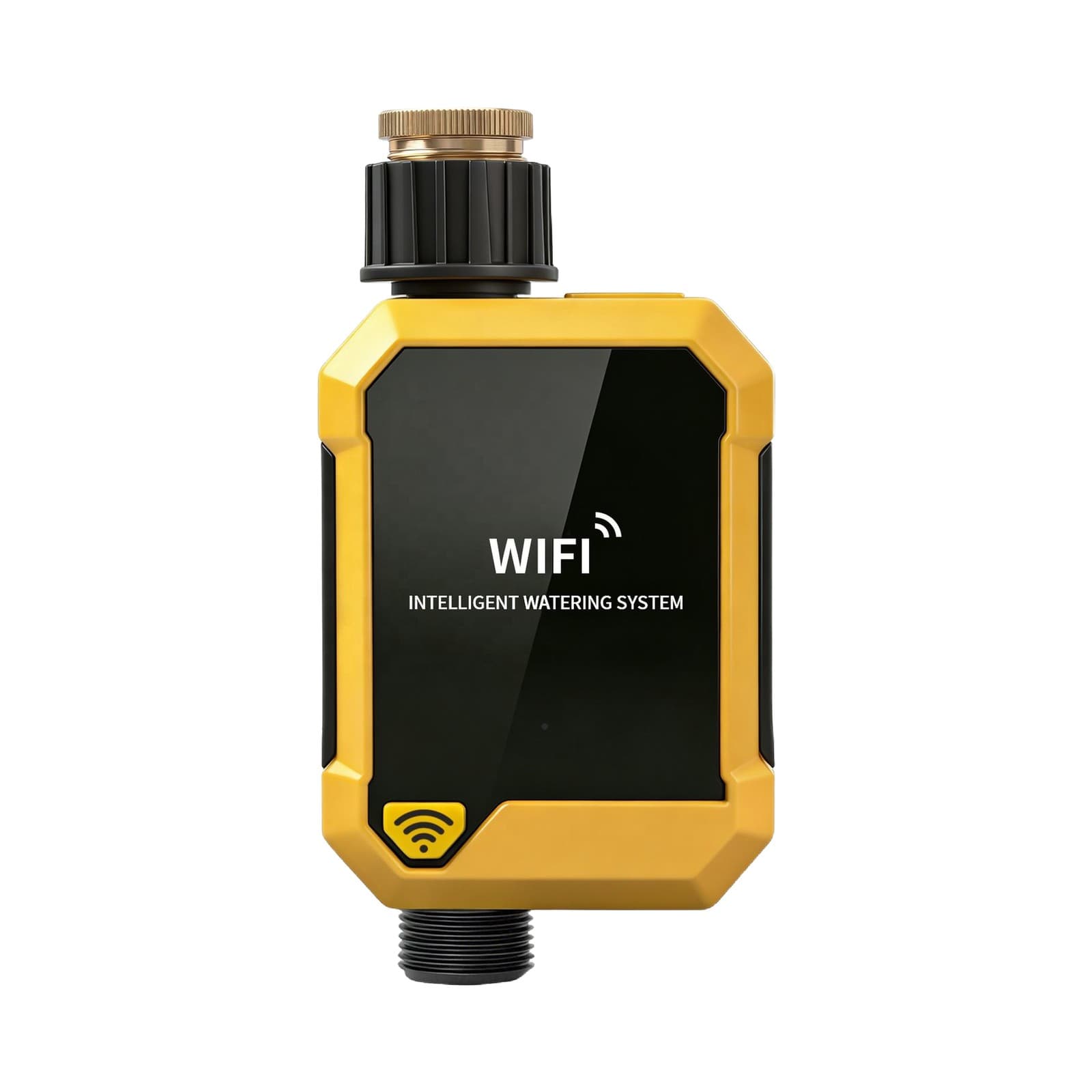
Passive spikes excel at one pot per spike for one to two weeks. Beyond that, the maths change: a balcony of fifteen pots in high summer drinks several litres a day, and no number of bottles covers a month. That is the drip-kit case — 4 mm line off a tap or reservoir, one dripper per pot, a battery timer running dawn and dusk. Set it, test it for a week, and the system waters the balcony whether you are gone two weeks or two months. The WiFi timers add remote control and rain-skip, which is genuinely useful when the airport lounge is where you remember you never tested the schedule.
The grow-bag warning
Fabric grow bags deserve their own paragraph, because they dry out faster than anything else on a balcony — the same breathability that prevents root rot wicks moisture out of every surface. Spikes alone struggle to keep pace with a mature tomato bag in July. The working stack for travel: mulch the bag top thickly, double the spike count, place the bag in a shallow catch tray holding a 2–3 cm water reserve, and if the trip is long, put the bag on a timer drip. The catch-tray reserve is the part that saves it — the bag wicks from below all day.
Pick the system that matches the trip length — spikes to two weeks, drip-and-timer beyond — then test it for a real week before you leave. Vacation watering fails at installation and testing, never at the airport.