For cat households
Cat-Proof Wall Gardens: The Only Plant System Cats Cannot Destroy
8 min readPublished 2026-10-25Updated 2026-10-25
The only plant system a determined cat cannot destroy is one mounted flush to the wall: wall-mounted pocket planters keep soil, stems and — critically — every dangling string above and out of paw range. Hanging baskets, the classic advice, fail with cats twice over: the rope is a toy, and the swinging basket is a toy with soil in it. A wall garden gives your cat nothing to bat, bite or climb, which is why it is the setup veterinary-adjacent threads keep converging on after the horror stories.
The horror stories are real, and they are why this guide exists. One widely shared cat-owner thread described a 3 a.m. emergency vet visit after a cat swallowed twine chewed off a macrame hanger — a surgery warning that has since been repeated across several cat subreddits. Another, with hundreds of upvotes, asked the blunt question: "how do I stop my cat eating every plant I own?" The standard answers — hang it higher, use deterrent spray, buy the cat grass — all have the same flaw. They assume the cat will lose interest. Cat people know better.
Why the usual advice fails with cats
Hanging planters out of reach works for a week. Then the cat learns that the dangling rope moves when pawed, and you have installed a cat toy that sheds potting mix. Shelf arrangements fail differently: cats knock things off shelves for reasons that remain between them and their ancestors. Deterrent sprays — citrus, bitter apple — need reapplying after every watering and lose to persistence. And floor pots are simply salad bars with a lid.
What survives contact with a cat is a system with three properties. First, nothing dangles: no rope, no chains, no hooks with cord hanging below the pot. Second, the growing surface is vertical and flush, so there is no ledge to perch on and no basket to swing. Third, the soil surface is enclosed or elevated, because given a pot of fresh soil many cats will treat it as a second litter tray. Wall-mounted pocket planters tick all three — the fabric or felt pocket holds soil flat against the wall, the plant trails upward or outward rather than hanging on string, and there is no exposed saucer.
The setup, step by step
A cat-proof wall garden is a 90-minute project. Mount the pockets into something structural: studs behind drywall, or any masonry or solid timber wall. Most felt pocket walls hang from a rail or grommets; the anchor points carry the load, and the load is heavier than you think — a saturated 25 cm felt pocket holds 2 to 3 litres of wet soil, so figure roughly 3 kg per pocket, times however many pockets share an anchor. Two proper anchors per rail minimum. If you cannot drill — renters, that is the next guide — a floor-to-ceiling tension pole system with wall-leaning pockets is the fallback, but honestly, a single small hole patched with filler costs less than one destroyed monstera.
- 01Pick the wall: bright but out of the cat’s main jump path — beside a window beats across it, because cats patrol windowsills.
- 02Find your anchors: stud finder for drywall, plugs for masonry. Grommeted felt walls spread load across many points.
- 03Mount at cat-leap height: 150 cm+ to the bottom pocket if your cat is athletic; cats can clear about five times their height from a standing jump, so height alone is a delay, not a solution — flush mounting is the actual defence.
- 04Plant the top rows with cat-safe species (list below) so anything nibbled is nibbled safely.
- 05Water with a narrow-spout can or a bottom-watering tray, so no wet, interesting soil sits open at the top.
The cat-proof kit
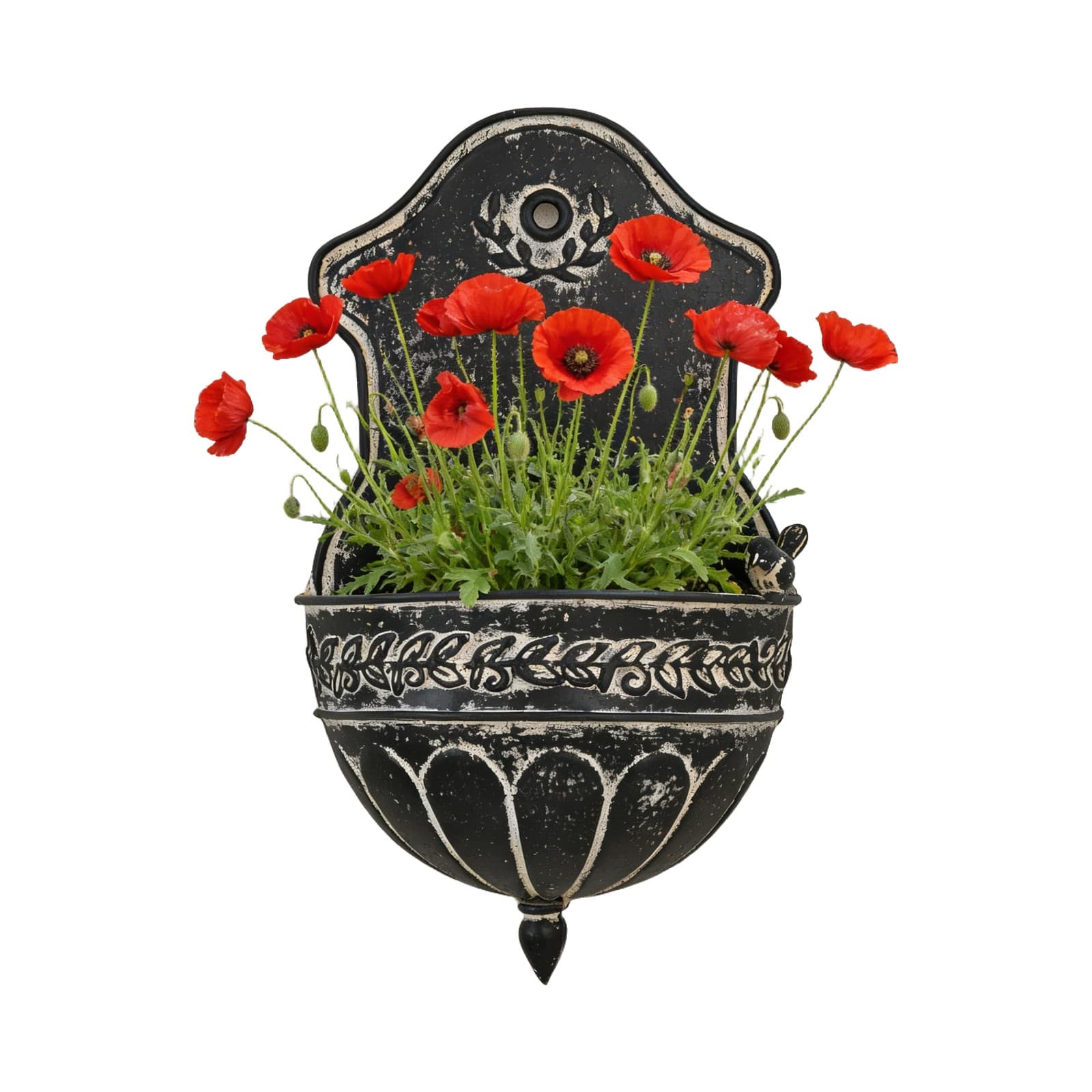
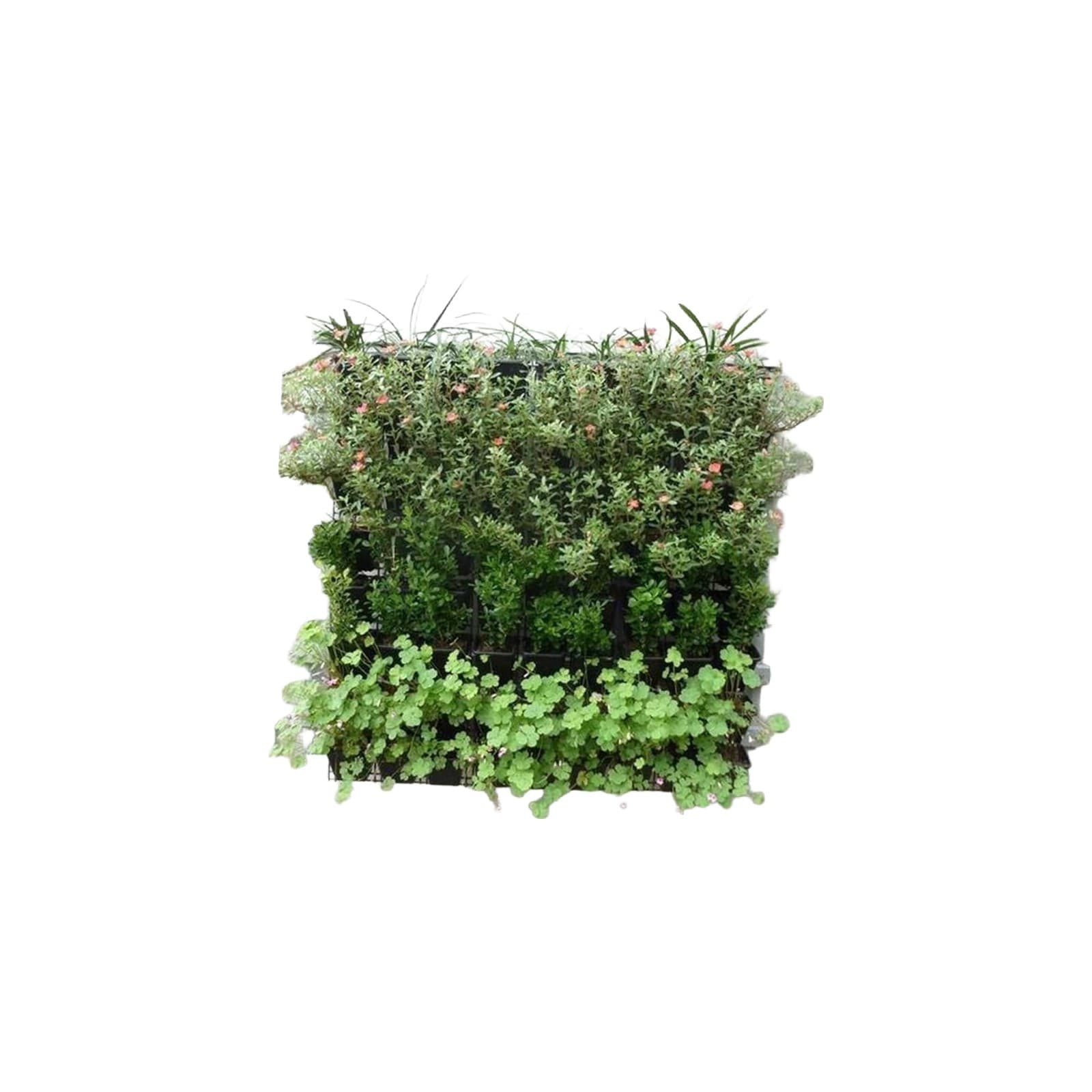
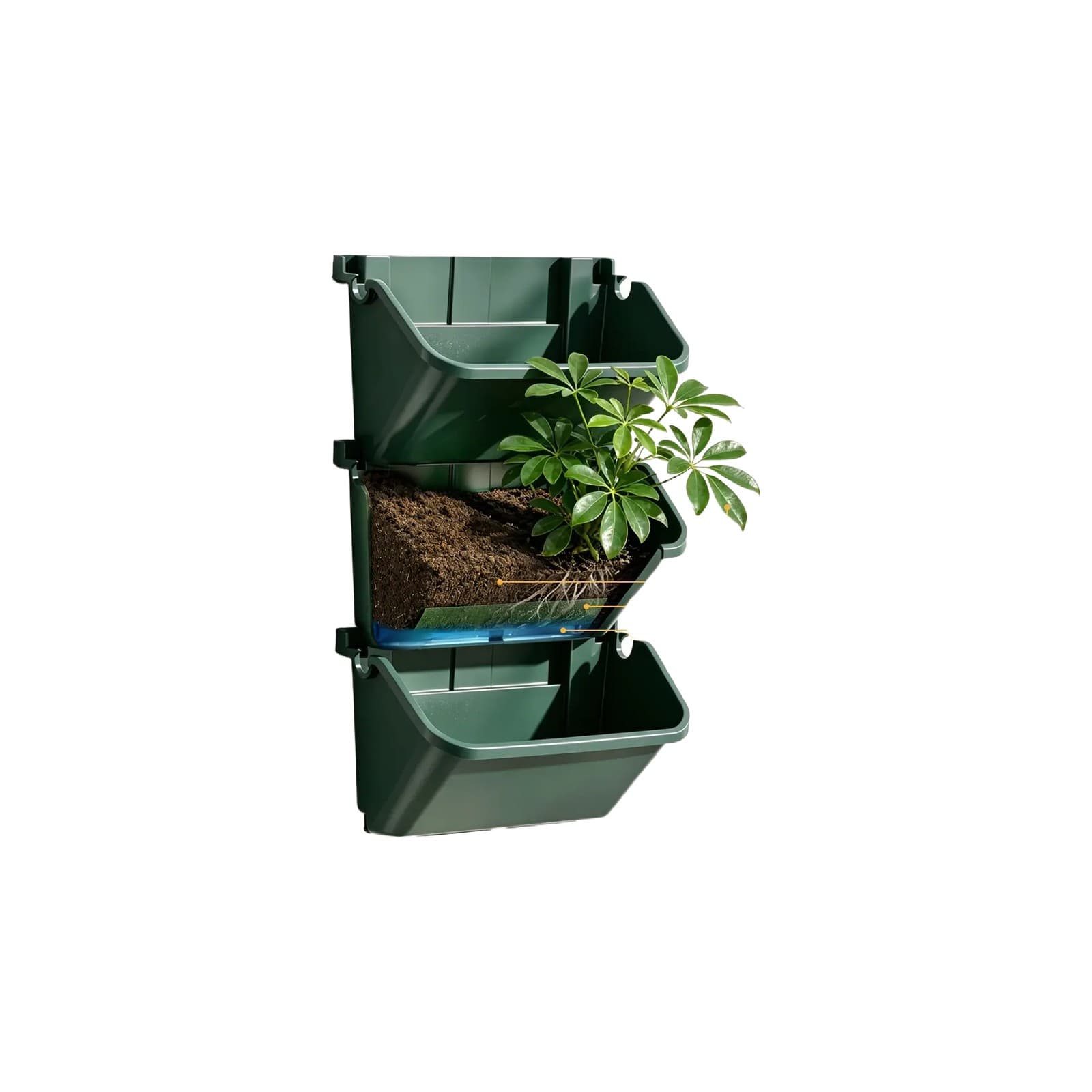
Fill it with plants that are safe to lose
Even a perfect system occasionally loses a leaf to a committed acrobat, so the top rows should hold plants that are harmless if eaten. Spider plants, peperomia, calathea, Boston fern, Areca parlor palms, and most true ferns are non-toxic to cats. Pilea peperomioides survives casual nibbling. Keep the toxic crowd — pothos, philodendron, lilies (never, anywhere, for any cat household), monstera, ZZ plant — in the highest pockets or in a separate room. The ASPCA toxic-and-non-toxic list is the reference; check every plant before it goes within reach.
- Safe and fast-trailing: spider plant, Swedish ivy, peperomia prostrata, calathea.
- Safe and structural: Boston fern, bird’s nest fern, parlor palm, ponytail palm.
- Keep high or elsewhere: pothos, philodendron, monstera, ZZ plant, jade plant — and never lilies.
What about the digging problem?
Some cats ignore leaves entirely and go straight for the soil. Felt pocket walls help here because the soil surface is small and vertical; self-watering wall planters help more, because water enters from a reservoir below and the top layer stays dry — and cats show little interest in dry soil. If your cat is a committed excavator, press a circle of chicken wire or a layer of decorative gravel over the exposed surface in the lowest pockets, and give the cat an acceptable digging zone: a cheap tray of soil or cat grass at floor level redirects most of the behaviour.
Realistic expectations
Materials: felt, metal or ceramic
For cat households, the pocket material matters less than the mounting, but there are real differences. Felt and fabric pockets are the most forgiving — a cat pawing at fabric meets give, not a smash risk, and a claw snag costs a thread, not a trip to the vet for a sliced pad. Their weakness is chronic chewers: a cat that shreds fabric will eventually shred a pocket, so felt suits pawers and nibblers, not shredders. Metal pocket rails and gutter-style systems are shred-proof but hard-edged — fine for most cats, worth reconsidering for the rare cat that headbutts everything. Ceramic wall planters are the pretty option and the breakage risk; one tail swipe at the wrong height ends them. The pragmatic pick for a first cat-wall is felt or fabric pockets in the patrolled zone, metal higher up if you want the look.
The training layer (yes, there is one)
The system removes the reward — nothing dangles, nothing swings — but a two-week redirect still speeds everything up. Give the cat a legal plant: a pot of cat grass or catnip at floor level, renewed every few weeks, absorbs most of the herbivore interest that would otherwise go to your calathea. Double-sided tape on any surface you want to keep paw-free works for a fortnight and then can come off; by then the wall is boring. And never punish a cat for plant interest mid-act — it teaches the cat to avoid you near the wall, not to avoid the wall. The design does the teaching; you just supply the alternative.
In the first week, expect an audit: your cat will smell everything and possibly sit on the top pocket like it is a shelf. That is the negotiation. After the novelty passes — usually under two weeks — the wall becomes furniture to both of you. Deterrent sprays are unnecessary in flush-mounted systems; the physical design does the work. The one failure mode we see repeatedly is under-mounting: a rail screwed only into drywall without anchors will pull out under 15 kg of wet felt, and a collapsing wall garden converts a sceptical cat-owner into a former one. Do the anchors.
The bottom line: cats do not destroy what they cannot dangle, swing or excavate. A wall-mounted pocket garden removes all three behaviours by design rather than by training — which is why it is the only plant system we sell to cat households without caveats.