For renters
No-Drill Balcony Planters for Renters: Every System That Spares Your Deposit
9 min readPublished 2026-10-25Updated 2026-10-25
You can garden an entire rental balcony without drilling a single hole: railing-clamp planters carry the rail zone, a floor-to-ceiling tension pole carries the vertical zone, and weight-rated adhesive hooks carry everything light. Deposits are lost to drilled tiles and patched masonry, not to plants — several apartment-living threads quote leases that explicitly say "do NOT patch holes", because a bad patch is worse than the hole. The systems below leave nothing to patch.
The question that starts most of these threads is some version of "is drilling okay?" — and the honest answer is that it rarely is. Lease clauses aside, balcony walls are usually single-skin block or sandwich panels; a 10 mm hole can bridge to the neighbour or break a moisture barrier. Meanwhile the two surfaces every balcony actually offers — the railing and the floor — need zero modification. That is where every no-drill system lives.
System 1: railing clamps (the workhorse)
Railing planters clamp to the balustrade with two or four bolts that hand-tighten against the tube — steel, aluminium or glass-edge rails all take them, and they release in five minutes at move-out. The one spec that matters is clamp range: measure your rail. Most European balcony rails are 25–50 mm tube; glass balustrades need the specific glass-clamp models. The second spec is depth: a 20 cm-deep trough grows herbs and annuals; 25 cm+ handles tomatoes with support. Drainage matters more on a rail than on the ground — a good railing planter has a reservoir with an overflow, so surplus water weeps away from the neighbour below instead of dripping.
System 2: the tension pole (your vertical wall)
A spring-loaded floor-to-ceiling pole pressed between balcony floor and ceiling slab holds adjustable arms for hanging pots — no fixings, and it resists lateral sway better than most people expect once loaded. The failure mode is unprepared floors: a pole on slick tile creeps. Put a rubber furniture pad under each end and re-tension after a week. Weight limit is the pole’s, typically 10–20 kg spread across arms — fine for trailing pothos and herbs, not for a saturated 40 cm citrus tub.
System 3: weight-rated adhesive (for the light stuff)
Adhesive hooks get dismissed because of the memory of a falling pot — and that memory is earned, because the classic mistake is hanging a wet plant on a hook rated for drywall photo frames. The working rule from the plant threads: use hooks rated 4 kg+ per pair, respect the rated weight, and hang only light things — air plants, small macrame with faux or dried stems, a window rod with trailing string-of-pearls. One widely upvoted thread on weight limits is basically a memorial wall of plants lost to 1 kg hooks. Adhesive needs a smooth, non-porous surface (glass, painted metal, glazed tile), a 24-hour cure before loading, and it releases clean with pulling tabs.
Wind: the renter’s real boss fight
Balconies above the third floor are windier than any garden, and wind does two things: it dries pots out at double speed, and it turns unsecured lightweight planters into projectiles. The fixes are unglamorous. Clamp everything that clamps; add a gravel or pebble mulch top to weigh pots and slow evaporation; choose denser foliage (rosemary, ivy, heuchera) for the windiest rail positions; and bring anything under 2 kg inside when a storm is named. Terracotta spikes help with the drying — they meter water over days, which is exactly what a windy balcony needs.
The renter’s no-drill shelf
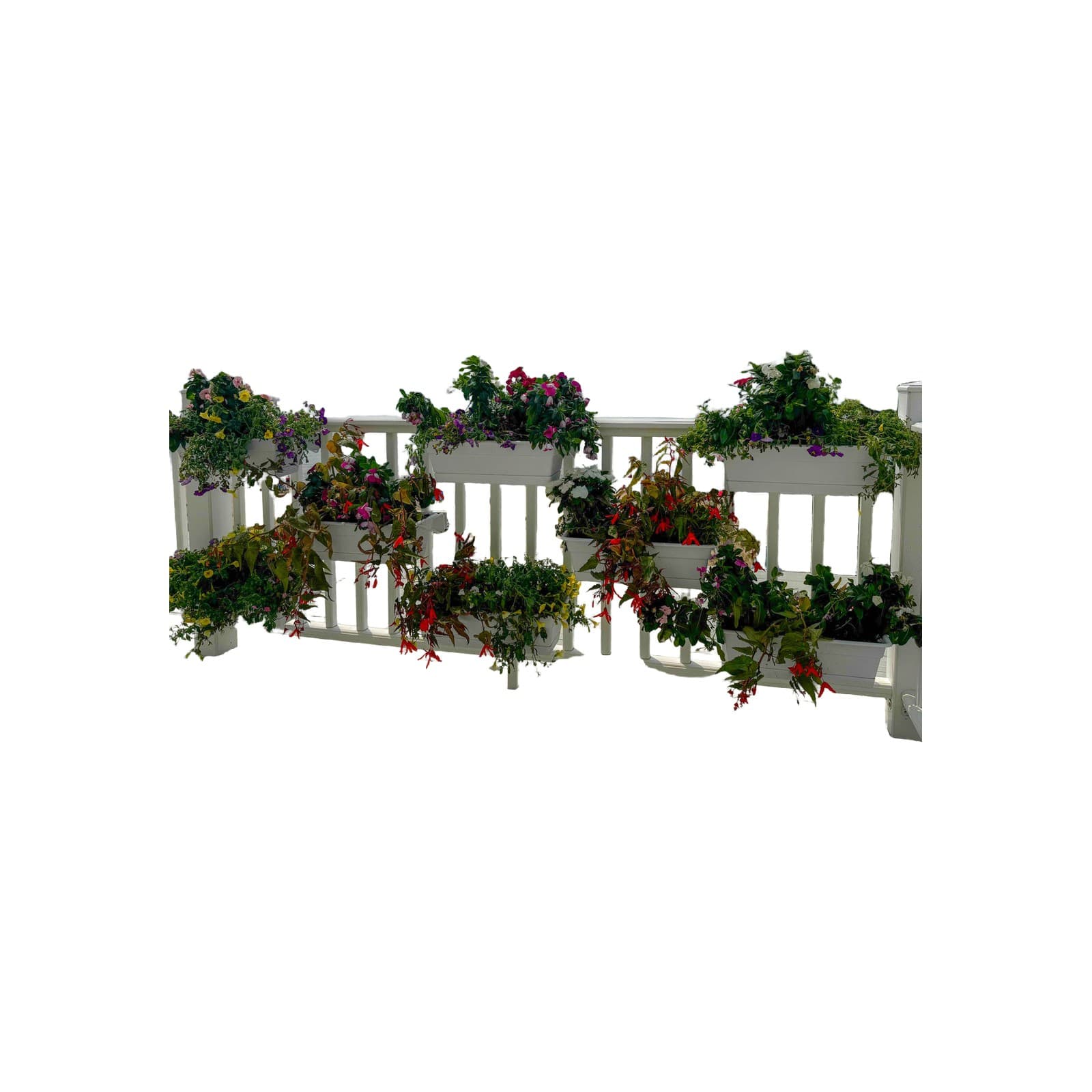
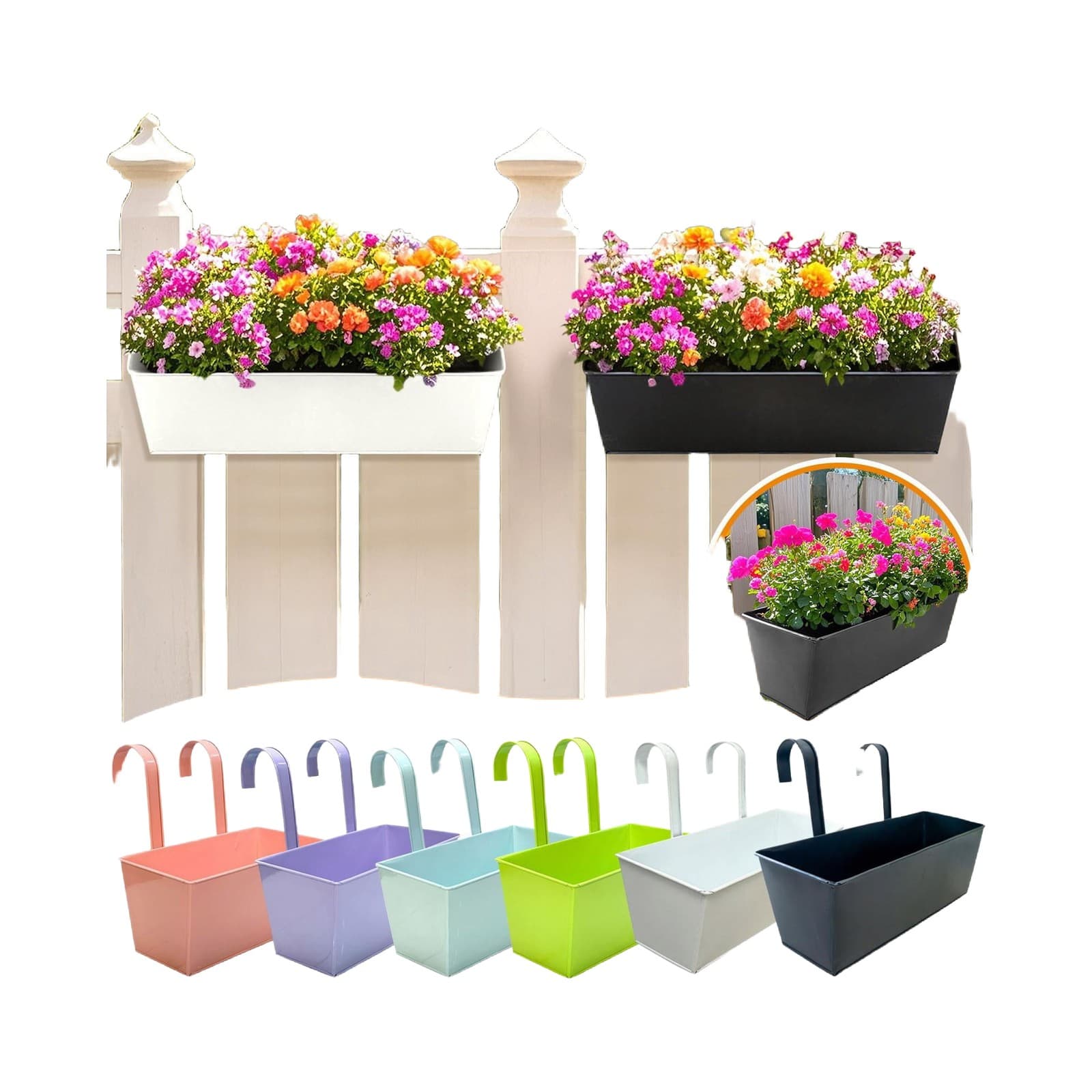
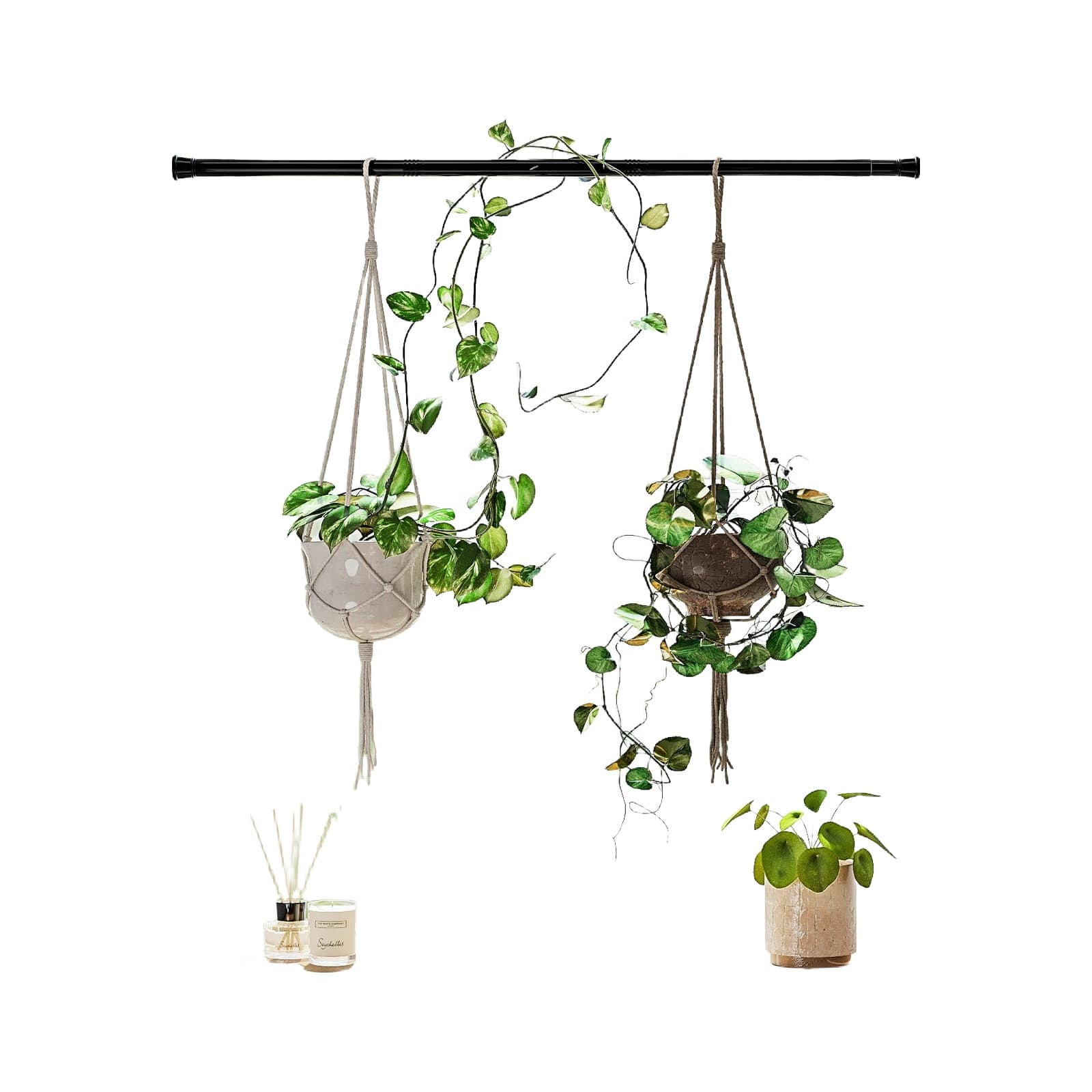
Odd rails, glass balustrades, and other landlord classics
Three balcony types cause most of the questions. Wide or square-section rails (50–60 mm, common on newer builds) need the larger clamp sizes — measure before ordering, and note that square rails clamp better than round ones because the contact faces are flat. Glass balustrades cannot take standard clamps at all: the options are glass-specific clamps that grip the panel edge, freestanding planter boxes on the floor inside the glass line, or a tension pole anchored floor-to-ceiling beside the glass. And the shared-party-wall balcony, where the dividing wall belongs structurally to the neighbour, is exactly the surface not to drill — everything on that side should be clamped, leaned or tensioned.
What the landlord actually cares about
Reading the deposit threads closely, landlords raise three objections, and none of them are plants. Water damage — staining or pooling on the balcony floor or dripping onto the flat below — is the big one, solved by catch trays under everything and planters with overflow-directed reservoirs. Weight on the railing is the second: balcony rails are engineered for lateral leaning loads, and a row of clamped planters distributing 40–60 kg along the rail is fine, while 60 kg concentrated on two clamps at one point invites questions. Blocking escape routes is the third — keep the door swing and the fire-escape path clear, keep heights below the rail line where the sight-line matters. A tray-disciplined, distributed, low-profile garden reads as an asset in listing photos, which is exactly why some landlords now mention "plant-friendly balcony" as a feature.
| Zone | No-drill system | Typical load | Move-out time |
|---|---|---|---|
| Railing | Clamp planters, 25–60 mm range | 15–25 kg per metre, distributed | 5 minutes |
| Vertical | Floor-to-ceiling tension pole | 10–20 kg across arms | 2 minutes |
| Wall (smooth) | Weight-rated adhesive hooks, 4 kg+ pairs | 2–3 kg per pair, light trailing plants only | 1 minute with pull-tab |
| Floor | Caddies, catch trays, stackable towers | Whatever the slab allows — which is everything | Roll it out |
The floor zone: what nobody uses
The balcony floor is free square metres and renters ignore it because drainage feels risky. Two products solve it. A plant caddy with wheels lets you roll the whole arrangement to chase sun and sweep under it. A heavy-duty catch tray under every pot means no water ever reaches the tiles — which matters more for the deposit than the plants, because stained balcony floors are the second-biggest deposit complaint after holes. For the biggest harvest per square metre, a stackable tower planter turns one 40 cm floor tile into five growing levels.
The move-out checklist
- 01Unclamp railing planters, wipe the clamp contact points — powder-coated rails show no marks.
- 02Release the tension pole; check the rubber pads left no ring (they do not, on any finish we have tested).
- 03Peel adhesive hooks with the pull-tab slowly, parallel to the surface; residue, if any, lifts with isopropyl.
- 04Sweep and mop; present the empty balcony the way you found it.
- 05Photograph everything on the last day — 30 seconds of photos has ended more deposit arguments than any lease clause.
Cost reality, once
Renter gear gets compared to "just drilling" because drilling feels free — it is not. A masonry bit, wall plugs and a filler tube run real money if you do not own them, and a withheld deposit on one patched hole runs much more. A full three-zone no-drill garden — two railing troughs, a tension pole, a tower on the floor, trays underneath — lands around the price of a single mid-range planter from a boutique garden shop, and it is an asset you take to the next flat. The drill-averse set-up is not the cheaper-looking cousin; over two or three rentals it is the cheaper option on any honest spreadsheet.
None of this is a compromise garden. Clamps, poles and rated adhesive cover rail, wall and floor zones with real growing capacity — and every gram of it walks out the door with you when the lease ends.