Light
Grow Lights That Are Not Ugly: Warm-White, Hidden, and Furniture-Grade
7 min readPublished 2026-10-25Updated 2026-10-25
A grow light stops looking like a grow light the moment it borrows the form and colour of ordinary lighting: warm-white full-spectrum bars tucked under a shelf, a pendant lamp that happens to feed the fiddle-leaf fig under it, a clip light hidden behind foliage pointing down. Nothing about plant biology requires the purple "blurple" look — that colour is a manufacturing cost shortcut, not an optimum — and warm-white diodes in the 2700–3500K range grow plants just as well while reading as normal home lighting to every eye, including your cat’s.
The "grow lights are ugly" debate is really two arguments. One is colour: blurple makes a living room feel like a laboratory and renders every other object in bruised tones. The other is form: bare gooseneck clips and panel rigs announce themselves. Both are solved problems. The interior-plant accounts that blend lighting invisibly are not hiding special hardware — they are using the same consumer light bars and pendants sold here, placed where ordinary light furniture already goes.
The specs that matter (and the ones that do not)
- Colour temperature: 2700–3500K warm-white reads as home lighting. Full-spectrum white LEDs deliver the wavelengths plants need across blue and red; the "missing" green light is partly reflected, partly used.
- Intensity: ignore lumens (a human-eye metric) and watts at the plug. The plant metric is PPFD (µmol/m²/s). Foliage plants want 100–300 PPFD for 12 hours; herbs and edibles 300+; high-light succulents 400+. A bar at 20–30 cm above the plant typically delivers 150–400 PPFD across its footprint.
- Coverage: match bar length to shelf width, not room. Light is local — one 60 cm bar lights one 60 cm shelf, and the plant 80 cm to the side is unlit.
- Heat: bars that run cool can sit close to foliage without scorching, which is what makes under-shelf placement possible.
- Timer: non-negotiable. Photoperiods run themselves on a built-in 12/16-hour cycle, and the plant gets consistency, which matters more than raw intensity.
The three invisible placements
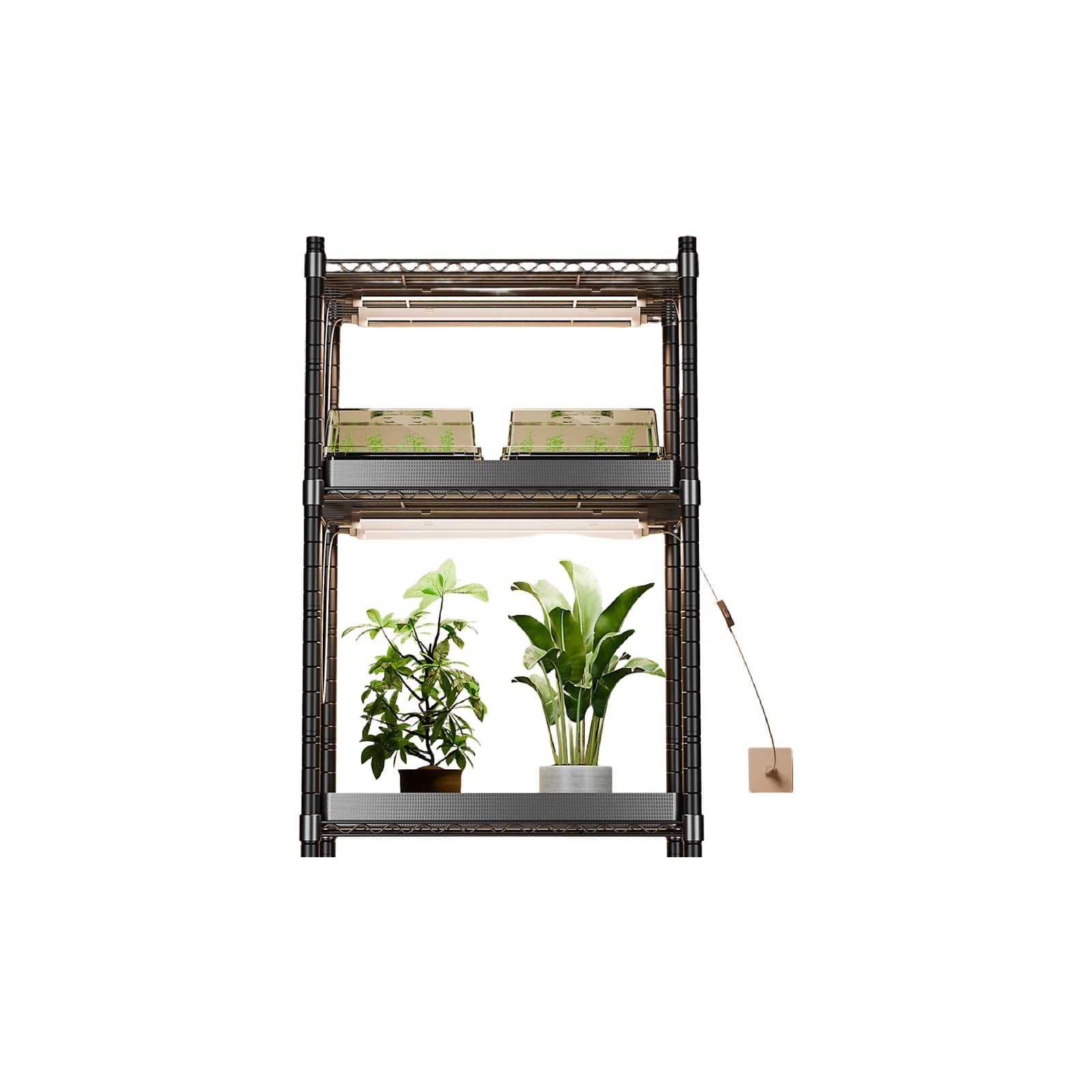
Under-shelf bars are the highest-value placement: a slim warm-white bar fixed to the underside of any shelf turns the shelf below into full-time growing real estate, and from across the room it reads as under-cabinet lighting — the exact treatment kitchens have used for twenty years. This is where the supermarket-basil rescue and the seed-starting trays live, because the light is at the right distance and completely out of the visual field.
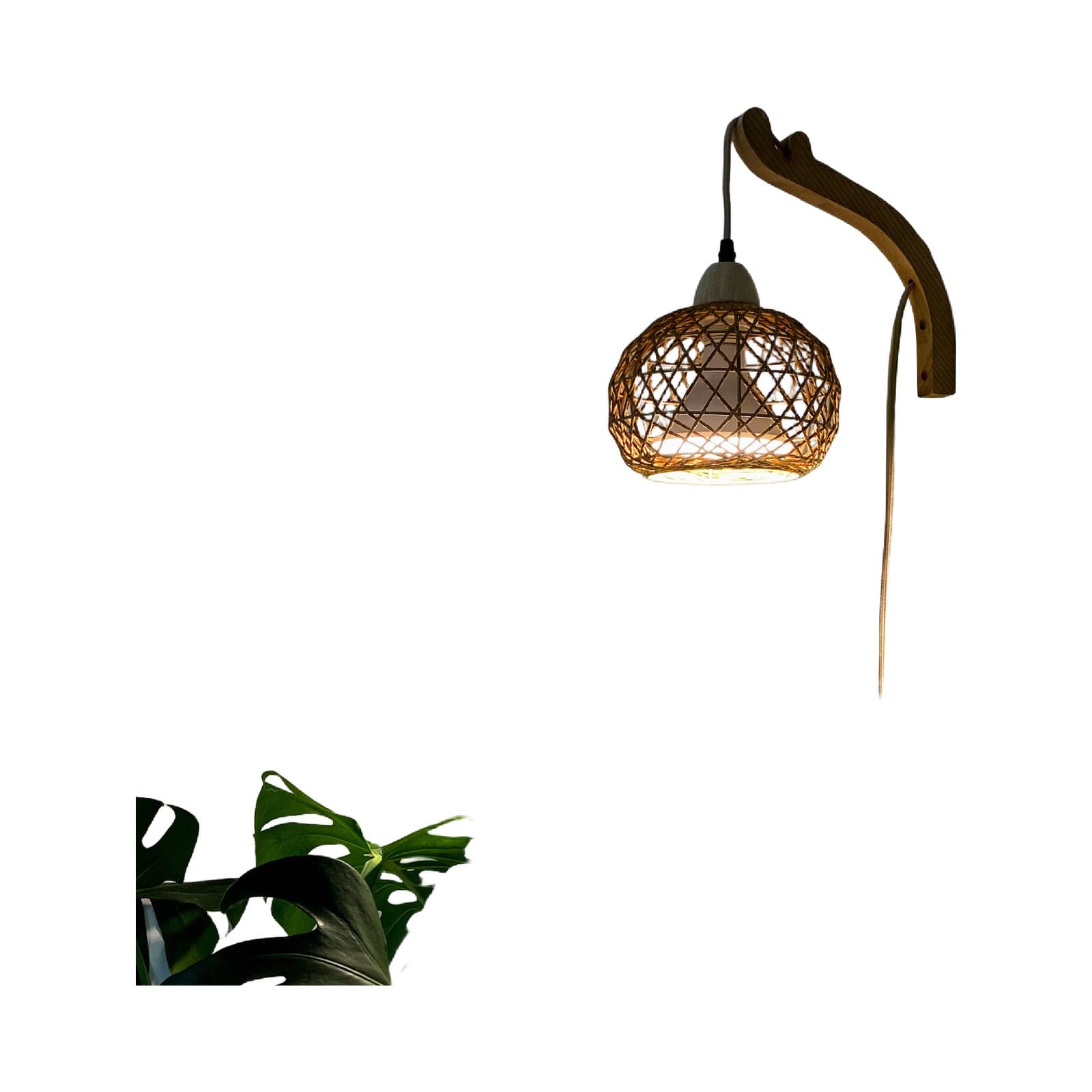
Pendants pass as furniture because they are furniture: a full-spectrum pendant hung at 60–90 cm above a plant table lights the whole table evenly and looks like a deliberate dining or reading lamp. The rule is height — high enough to light a zone rather than spotlight one plant, low enough to keep PPFD meaningful. One pendant over a plant table converts a dim living-room corner into the best-lit growing spot in the flat, and guests see a lamp.
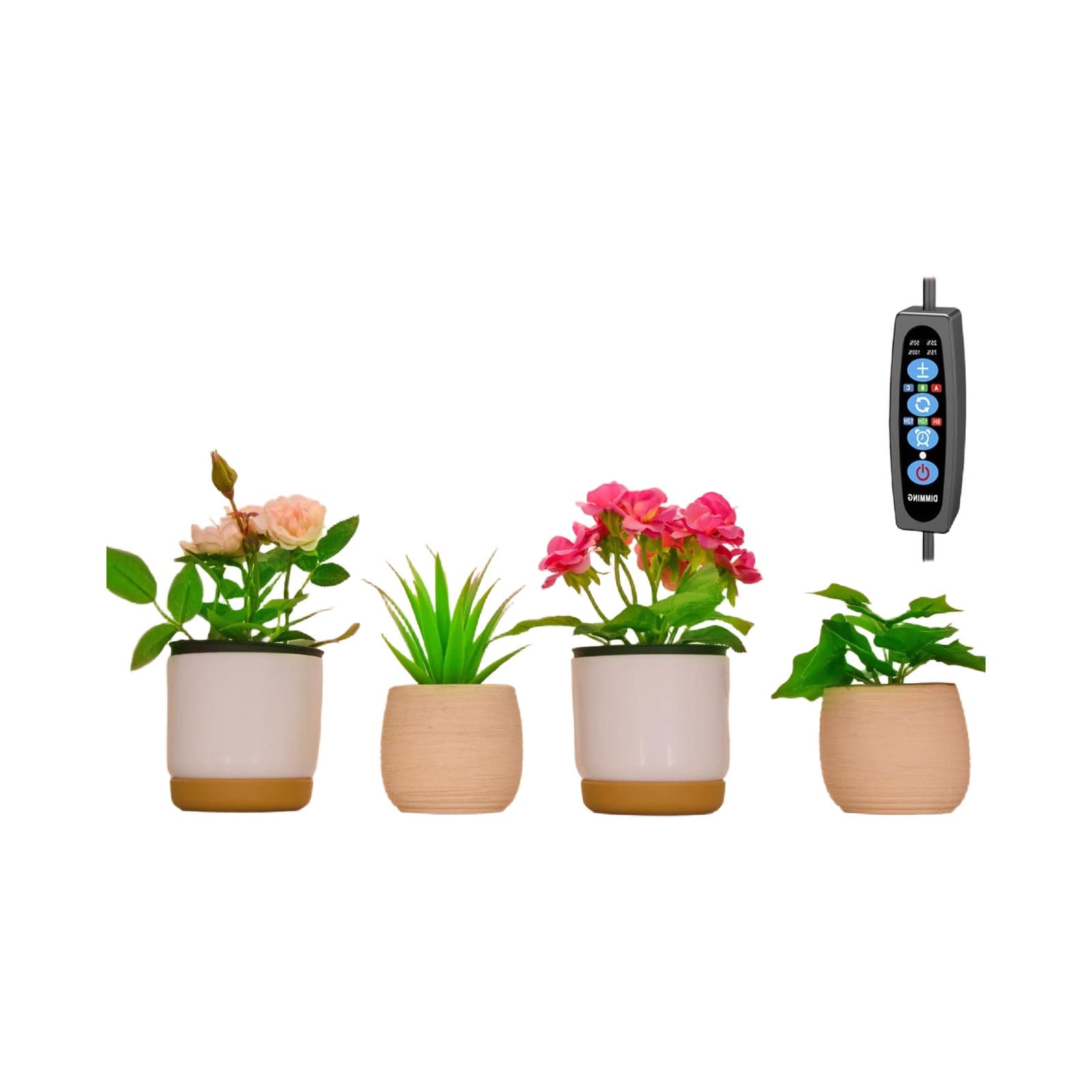
Clip lights hide behind the plant they serve: clipped to a shelf edge or the pot rim itself, arm routed up behind the foliage so the fixture sits at the back-centre of the plant, pointing down into it. From the front you see only a brighter, warmer version of the plant. This is the placement for the single light-hungry specimen — the calathea that browns every winter, the basil that must survive January — and it costs one clip light.
The invisible-light shelf
Reading your room: where the light actually goes
Placement starts with an honest light map, and it takes one day. On a bright day, check the room at 9:00, 13:00 and 17:00 and note where direct sun patches land and where the ambient light reaches. Windowsills are not one category: south-facing sills take hours of direct sun (succulents, citruses, herbs), east and west take morning or afternoon sun (most foliage), and north-facing sills are ambient-only — the dim corner the skill-less setups never fix. The wall two metres from any window loses roughly half the light of the sill; four metres out, the light is a reading-lamp level, and no plant thrives there without help. That map tells you where the bar goes: the shelf above the dim two-metre zone is the highest-value placement in most flats, because it converts a no-go zone into growing space for the price of one bar.
What to grow where in winter
Winter changes the assignment. Day length collapses, sun angle drops so low that even south sills lose intensity, and the plants that coasted outdoors need help. The allocation that works: edibles and seed-starting get the under-shelf bar first, because they need the most PPFD and the timer does the photoperiod work. Light-hungry foliage — calathea, ficus, orchids — takes the pendant or clip placements. Cacti and succulents take the best natural sill and no artificial light; a cool, bright and dry winter is exactly their natural cycle, and the most common succulent death is a well-lit grow-shelf plus regular water in January. Herbs on the kitchen counter want the strongest placement of all — a 16-hour photoperiod at 30 cm — and reward it with winter harvests.
| Placement | Fixture | Run time | Grows well |
|---|---|---|---|
| Under-shelf | Slim warm-white bar, 20–30 cm above plants | 12–14 h timer | Seedlings, herbs, propagation trays |
| Pendant, 60–90 cm | Full-spectrum pendant lamp | 12 h timer | Plant tables, mixed foliage groups |
| Clip, behind foliage | Clip-on gooseneck, arm hidden | 10–12 h timer | One light-hungry specimen |
| Corner stand with integrated light | Built-in bar over tiers | 12 h timer | The dim corner, whole collection |
The photoperiod, simplified
Most foliage plants want 12–14 hours of light; edibles and seedlings want 14–16. Run the lights on a timer that starts them in the morning — a 06:00–20:00 window is the set-and-forget default — and let darkness be darkness. Plants need the dark period for metabolism, and a light running 24/7 is both worse for the plant and the fastest way to make a warm-white bar noticeable again. If the bar is in a room you use in the evening, ending the photoperiod at 20:00 means you never see it on at all in the hours you are actually in the room.
The styling rules the interiors crowd uses
- Match the metal: black bars on black shelves, brass-finish pendants with brass fittings. Fixture colour is half the perceived "fit".
- Hide the cable before you judge the look — a 2 m cable snaking down a shelf is what actually makes installations look cheap. Cable clips every 30 cm.
- Light the plant group, not the single plant: a bar over a cluster reads as intentional design; a spotlight on one lonely pothos reads as life support.
- Warm-white in living spaces, any temperature in utility corners. A germination rig in a spare room can look like whatever it wants.
- Put the brightest placement where guests look anyway: a lit plant table by the sofa draws the eye exactly like a reading lamp does.
Dim corners are not a life sentence for houseplants. A warm-white bar under the right shelf, on a timer nobody ever sees running, quietly doubles the plantable area of most flats — and the light itself never announces the operation.